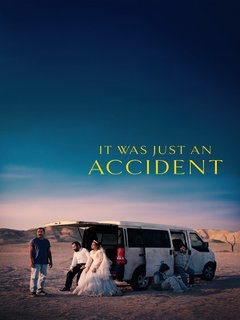
In May 2025, a director who had spent years banned from making films, and months in a Tehran prison, walked onto the stage at Cannes and collected the Palme d’Or. Jafar Panahi’s It Was Just an Accident — یک تصادف ساده — was the highest honour the festival gives, handed to a man the state had tried for two decades to silence.
It was not a fluke. Iranian cinema has been quietly beating the world’s festivals for thirty years. Here’s the pattern behind it, the films that prove it, and where the diaspora can finally watch them without a workaround.
The trophy case (the honest record)
| Film | Director | Prize | Year |
|---|---|---|---|
| The White Balloon | Jafar Panahi | Caméra d’Or, Cannes | 1995 |
| Taste of Cherry | Abbas Kiarostami | Palme d’Or, Cannes | 1997 |
| The Circle | Jafar Panahi | Golden Lion, Venice | 2000 |
| A Separation | Asghar Farhadi | Oscar + Golden Bear | 2011–12 |
| Taxi | Jafar Panahi | Golden Bear, Berlin | 2015 |
| The Salesman | Asghar Farhadi | Oscar | 2017 |
| The Seed of the Sacred Fig | Mohammad Rasoulof | Special Jury Prize, Cannes | 2024 |
| It Was Just an Accident | Jafar Panahi | Palme d’Or, Cannes | 2025 |
Two Palmes d’Or. Two Oscars. A Golden Bear, a Golden Lion. From a country whose film industry operates under one of the strictest censorship regimes in the world. That contradiction is the whole story.
Why censorship made the cinema better, not worse
There’s a cruel irony at the centre of Iranian film: the restrictions that were meant to flatten it are part of what made it great.
When you can’t show certain things — violence, intimacy, a woman’s uncovered hair, direct political speech — you learn to suggest instead of state. Kiarostami built entire films out of a car windscreen and a conversation. Farhadi turned a stairwell argument into a thriller about class and truth. The grammar of Iranian cinema — small casts, real locations, non-actors, moral questions left deliberately unresolved — is a grammar of necessity that turned into a style the rest of the world started copying.
Festival juries reward exactly that: restraint over spectacle, ambiguity over answers, and filmmakers who clearly have something at stake.
The two films that defined the last two years
The Seed of the Sacred Fig — دانهٔ انجیر معابد — is Mohammad Rasoulof’s 168-minute drama about a Revolutionary Court investigator whose family fractures as the 2022 protests fill the streets outside. Rasoulof had been sentenced to eight years and a flogging; he fled Iran on foot to reach the 2024 Cannes premiere, where the film won the Special Jury Prize. You are watching a film its own director risked prison to finish.
It Was Just an Accident — یک تصادف ساده — is Panahi’s answer to his own imprisonment: an auto mechanic becomes convinced a stranger is the man who once tortured him blindfolded, and a moral trap tightens by the scene. It took the Palme d’Or in 2025. Late-period Panahi is lighter on its feet than his confined experiments, but it carries the same question — what does an ordinary person owe to justice when the state has abandoned it?
It isn’t only the heavy films
The festival story isn’t all moral weight. My Favorite Cake — کیک محبوب من — by Maryam Moghaddam and Behtash Sanaeeha premiered in competition at the 2024 Berlin Film Festival, where it won the FIPRESCI and Ecumenical Jury prizes. The filmmakers were barred from travelling to attend — a quiet reminder that even a gentle film about an elderly widow deciding to stop being lonely can be treated as a threat. It’s the warmest Iranian film in years, and one of the bravest.
Where to start, and where to watch
If you’re new to this cinema, start with A Separation if you can find it, then My Favorite Cake for warmth, then It Was Just an Accident for the moral grip. The two recent Cannes-and-Berlin films sit in the 2024 collection alongside the rest of that landmark year, and the Iranian drama collection is the deeper shelf. If you want to see how the same filmmakers’ country is doing right now, the new 2025 releases keep arriving.
For two decades the diaspora was told the only way to watch these films was a VPN, a relative’s password, or a sketchy upload. That’s no longer true.
Watching on K-Time
Panahi’s and Rasoulof’s recent films stream on K-Time in original Persian, full quality, on Android TV, Fire TV, Google TV and Nvidia Shield — no VPN, no geo-block. A subscription is CA$9.99 per month or CA$99.99 a year, and plays one screen at a time — switch between your TV, phone and laptop freely. Start watching, get the TV app, or pick up the pre-configured K-Time دستگاه at an Iranian shop in the Greater Toronto Area.